Why “Heavy” Isn’t Enough
In the current streetwear landscape, labeling a hoodie “heavyweight” is no longer a unique selling proposition—it is table stakes. Discerning buyers and end-consumers can immediately distinguish between a cheap, stiff 400 GSM blank that turns rough after two washes, and a luxury-grade, dense, supple fleece that holds an architectural silhouette over years of wear.
The difference lies not just in fabric weight, but in fiber sourcing, spinning methods, knitting density, and pre-shrinkage finishing.
Here is our technical guide to sourcing high-grade heavyweight cotton, eliminating quality failures like “bacon neck,” and choosing the right GSM for your collection.
1. Yarn Quality Breakdown: Ring-Spun Combed vs. Open-End Carded
| Specification | Open-End (Carded) Cotton | Ring-Spun Combed Cotton | Compact Siro-Spun Combed Cotton (Luxury Tier) |
| Fiber Length | Short, uneven staple fibers | Long staple fibers, impurities & short fibers removed | Premium long-staple fibers aligned with dual-rotor twist |
| Surface Feel | Dry, scratchy, high initial fuzz | Smooth, soft, clean face for fine printing | Ultra-clean, silky hand-feel, zero surface fluff |
| Tensile Strength | Moderate; breaks under high friction | High tensile strength; resists wash abrasion | Exceptional strength; retains structure under heavy tension |
| Pilling Resistance | Poor (Grade 2–3) | High (Grade 4–4.5) | Maximum (Grade 4.5–5) |
| Ideal Use Case | Budget promo merchandise | High-end streetwear hoodies & tees | Ultra-luxury designer basics ($150+ retail) |
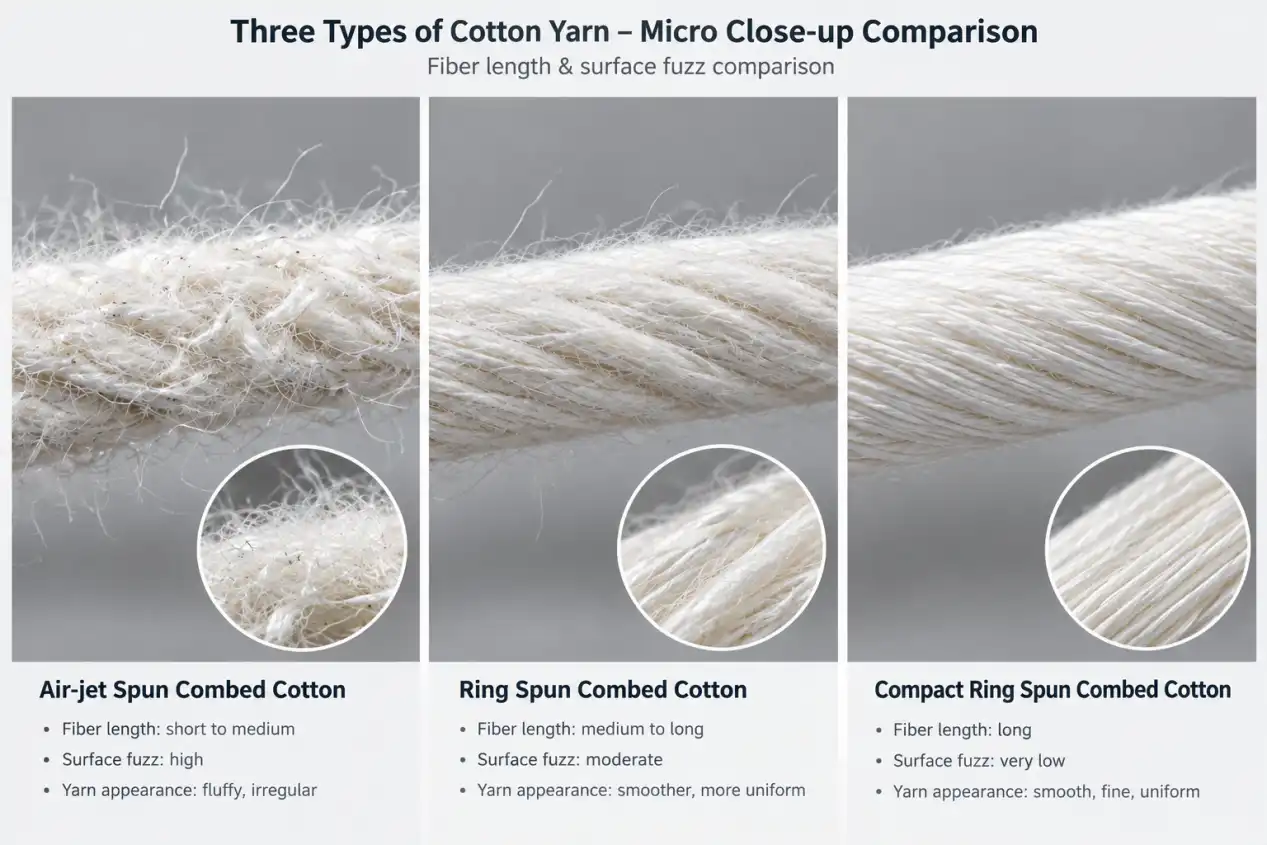
Why Combing Matters: The combing process combs out approximately 15–20% of short, irregular cotton fibers, leaving only aligned, long-staple fibers. This eliminates fiber breakage points, which are the root cause of surface pilling and fabric thinning.
Ring-Spun Density: Ring spinning twists the fibers tightly, creating a dense yarn with an ultra-smooth exterior face that holds crisp screen prints, clean direct-to-garment (DTG) ink penetration, and high-detail embroidery.
2. GSM Weight Breakdown: Matching Fabric to Silhouette
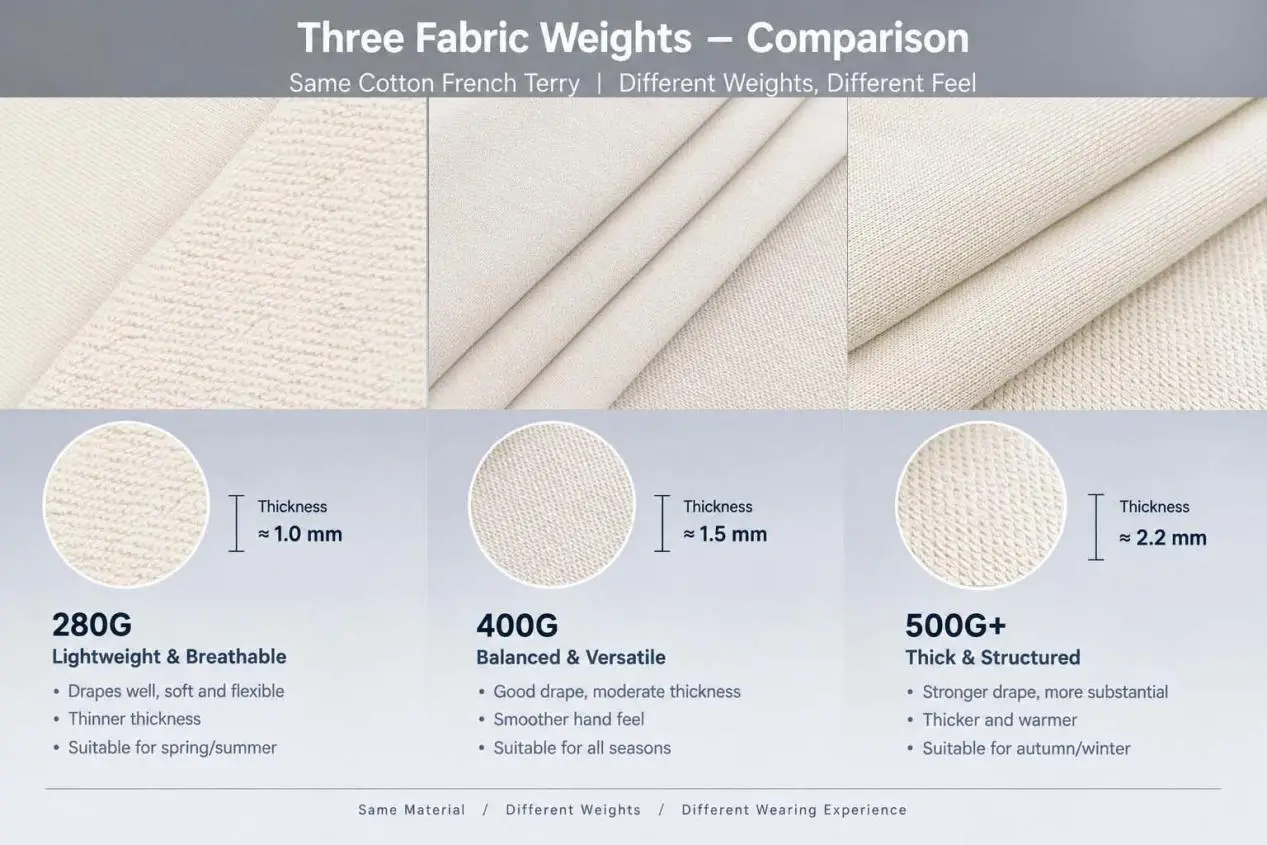
Grams per Square Meter (GSM) dictates garment drape, structure, and seasonality. Here is the standard breakdown for high-end streetwear development:
A. 240 – 320 GSM: Heavyweight Tees & Layering Tops
Fabric Structure: 100% Ring-Spun Combed Single Jersey (16s or 21s double-yarn).
Fit Profile: Provides a substantial, non-sheer drape with a clean, structured shoulder line. It falls away from the body rather than clinging, ideal for oversized, dropped-shoulder streetwear cuts.
B. 380 – 420 GSM: All-Season Premium Hoodies & Crewnecks
Fabric Structure: 100% Cotton 3-End French Terry (Diagonal Loopback) or Compact Fleece.
Fit Profile: Balanced density suitable for spring, autumn, and indoor winter wear. Offers sharp boxy silhouettes without feeling overly stifling or stiff.
C. 450 – 550+ GSM: Ultra-Heavyweight Structural Outerwear Fleece
Fabric Structure: High-density diagonal French terry or brushed fleece with a tight, tightly knit face.
Fit Profile: True architectural volume. The double-layered hood stands upright unsupported, the chest panel maintains a wide, rigid box shape, and the fleece provides substantial cold-weather insulation.
3. Engineering Against Common Sourcing Failures
High GSM alone will not save a garment from poor execution. Professional buyers must audit three critical production variables:
Eliminating “Bacon Neck” (Wavy Collars): The wavy distortion on t-shirt and hoodie collars occurs when low-recovery knit ribbing shrinks or expands at a different rate than the main body.
The Factory Fix: We engineer collars with high-density 1×1 or 2×2 heavy cotton ribbing blended with 5% premium Lycra/elastane, reinforced by twin-needle coverstitching and interior herringbone neck tape to lock collar recovery through 50+ wash cycles.
Shrinkage Control & Torque Prevention: Heavy knits are prone to significant shrinkage (up to 8–10%) and side-seam twisting (torquing) if cut off-grain.
The Factory Fix: All custom fabrics undergo continuous tubular compacting, stenter heat-setting, and optional pre-shrunk garment washing, keeping final shrinkage strictly under 3–5%.
Dyeing Fastness & Color Uniformity: Deep blacks and custom vintage pigment dyes must resist wash fading and dry friction.
The Factory Fix: We utilize low-impact reactive dyeing processes that achieve Grade 4+ colorfastness, preventing color bleeding onto white sneaker collars or light layers.
Scale Your Heavyweight Knitwear with Bespoke
Manufacturing high-spec streetwear requires complete control over yarn selection, fabric compacting, and pattern engineering.
At Bespoke, we specialize in custom heavyweight knits from 240 GSM tees to 500+ GSM fleece hoodies. We manage the entire pipeline—from fiber selection and custom reactive dyeing to precise tech pack grading and bulk production.