Introduction: The Shift from Pure Knits to Mixed Technical Outerwear
Modern streetwear brands are no longer built entirely on t-shirts and hoodies. To capture higher average order values (AOV) and establish seasonal credibility, independent labels must expand into transitional outerwear: lightweight windbreakers, utility overshirts, and heavy-duty workwear jackets.
However, moving from knits into technical wovens introduces distinct manufacturing complexities. Sourcing synthetic fabrics that look cheap and plasticky, or canvas that feels uncomfortably stiff, can damage an upscale brand image.
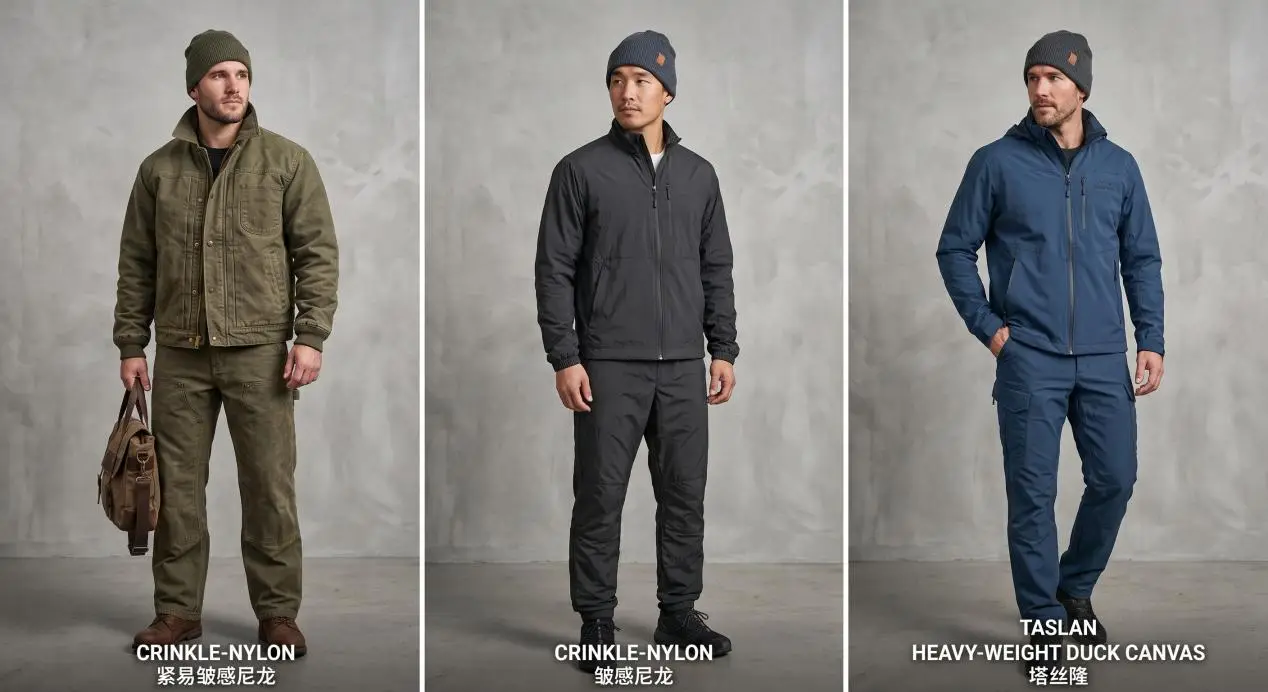
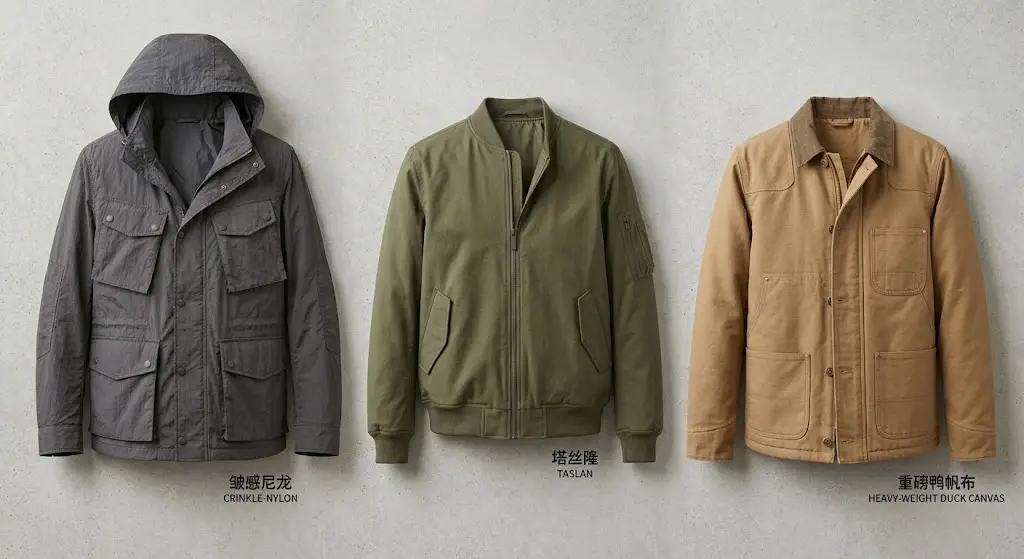
Here is a technical comparison of the three primary outerwear textiles—Crinkled Nylon, Taslan, and Heavy Cotton Duck Canvas—along with the performance coatings and factory craftsmanship required to elevate them.
1. Fabric Specification Comparison Table
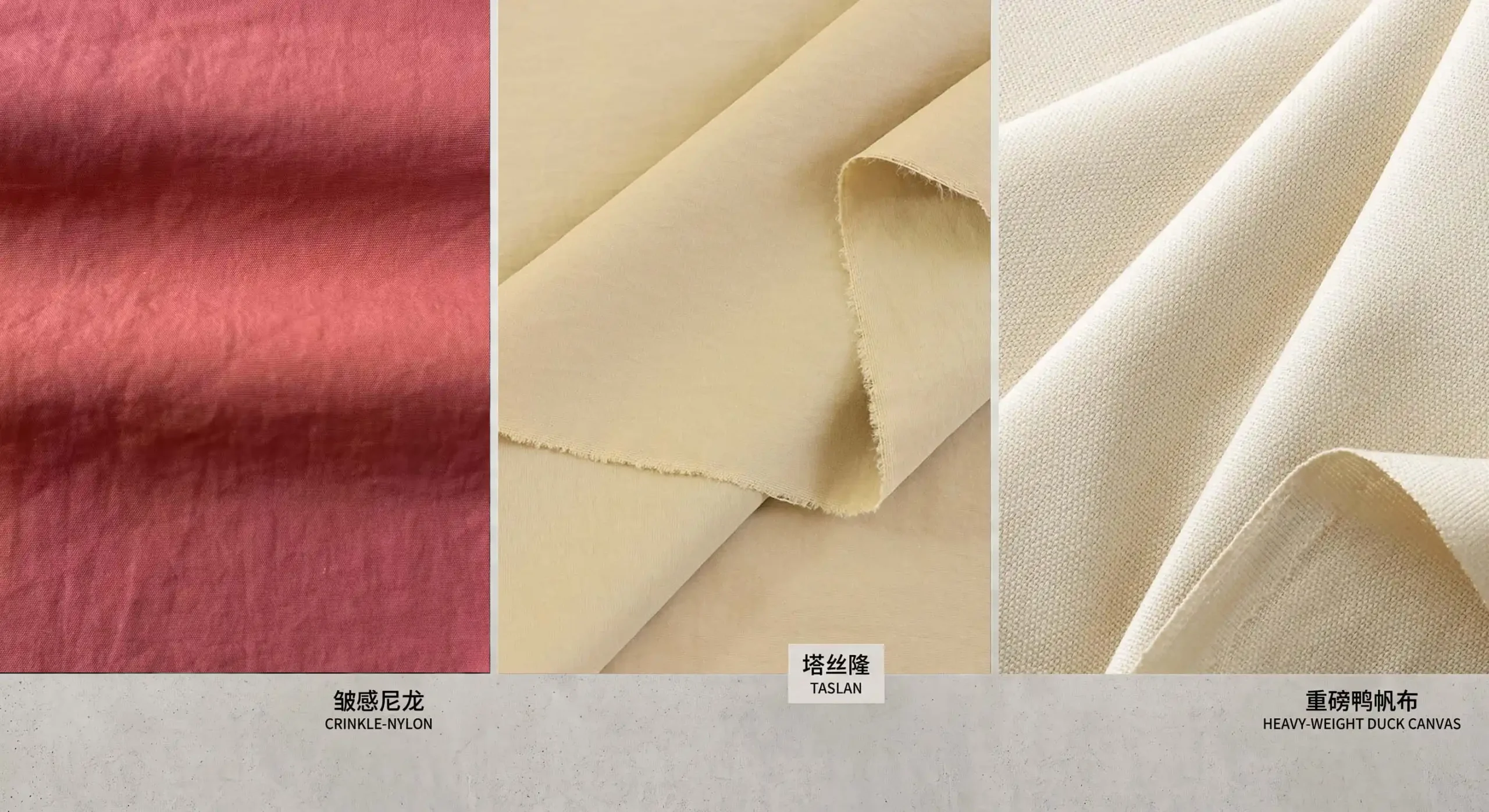
| Specification | Crinkled Nylon (70D–120D) | Nylon Taslan (160D–228T) | Washed Cotton Duck Canvas (12–16 oz) |
| Fiber Base | 100% Polyamide (Nylon 6 / 66) | Air-textured Nylon filament | 100% Ring-Spun Heavy Cotton |
| Surface Texture | Matte, organic crinkled/papery relief | Cotton-like, dry matte hand-feel | Dense, diagonal/plain weave structure |
| Primary Advantage | Featherlight weight, packable, subtle sheen | High abrasion resistance + cotton-like touch | Extreme structural durability & workwear drape |
| Weather Resistance | DWR water-repellent + windproof | DWR water-repellent + PU/TPU breathable coating | Wind-resistant (heavy barrier); can be waxed |
| Garment Applications | Packable windbreakers, track pants, shorts | Technical mountain parkas, transition shells | Chore coats, carpenter pants, trucker jackets |
2. Deep Dive: Selecting the Right Outerwear Shell
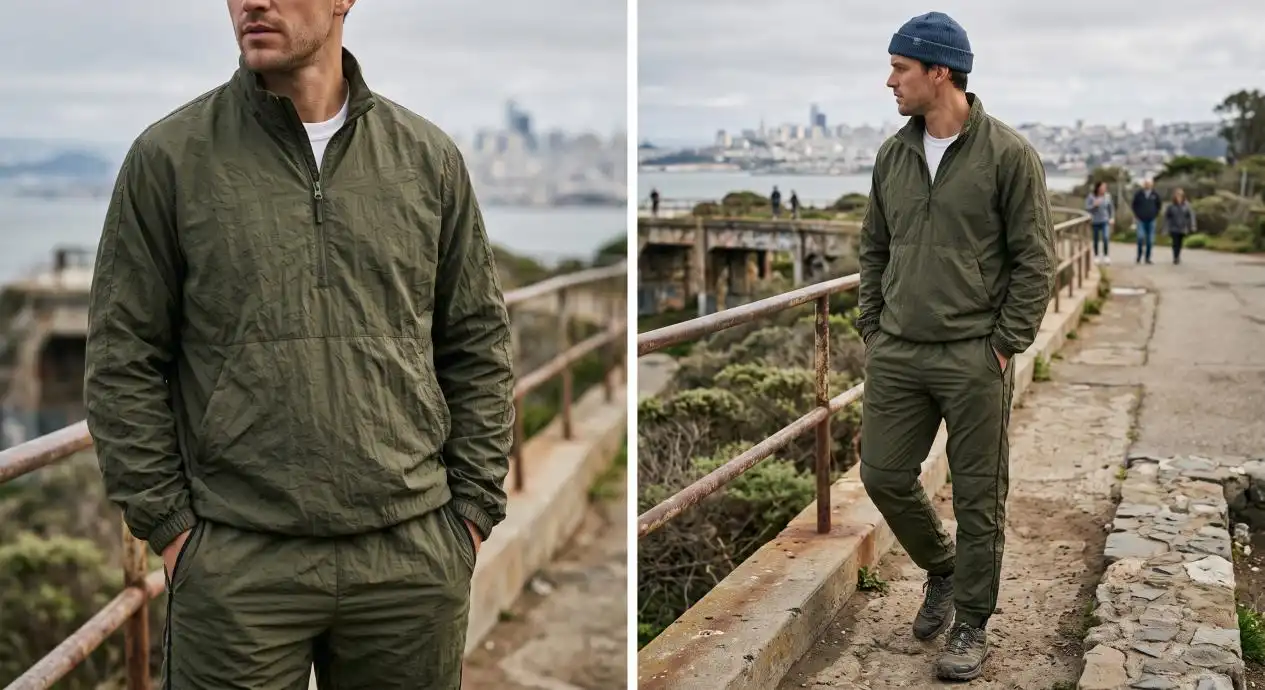
A. Crinkled Nylon: The Modern Streetwear Staple
The Engineering: Produced by applying controlled thermal tension or high-temperature bath treatments to high-density nylon filaments, creating micro-creases across the surface.
Why Brands Choose It: It eliminates the slick, loud shine of cheap polyester. The matte, tactile crinkle texture gives an organic, luxury-tech feel to retro tracksuits, lightweight popover anoraks, and summer cargo shorts.
Key Spec to Demand: Request 70D to 120D semi-dull FD (Full Dull) nylon with a C0 fluorocarbon-free Durable Water Repellent (DWR) finish to ensure environmental compliance and water beading without a stiff film.
B. Nylon Taslan: The Cotton-Touch Performance Hybrid
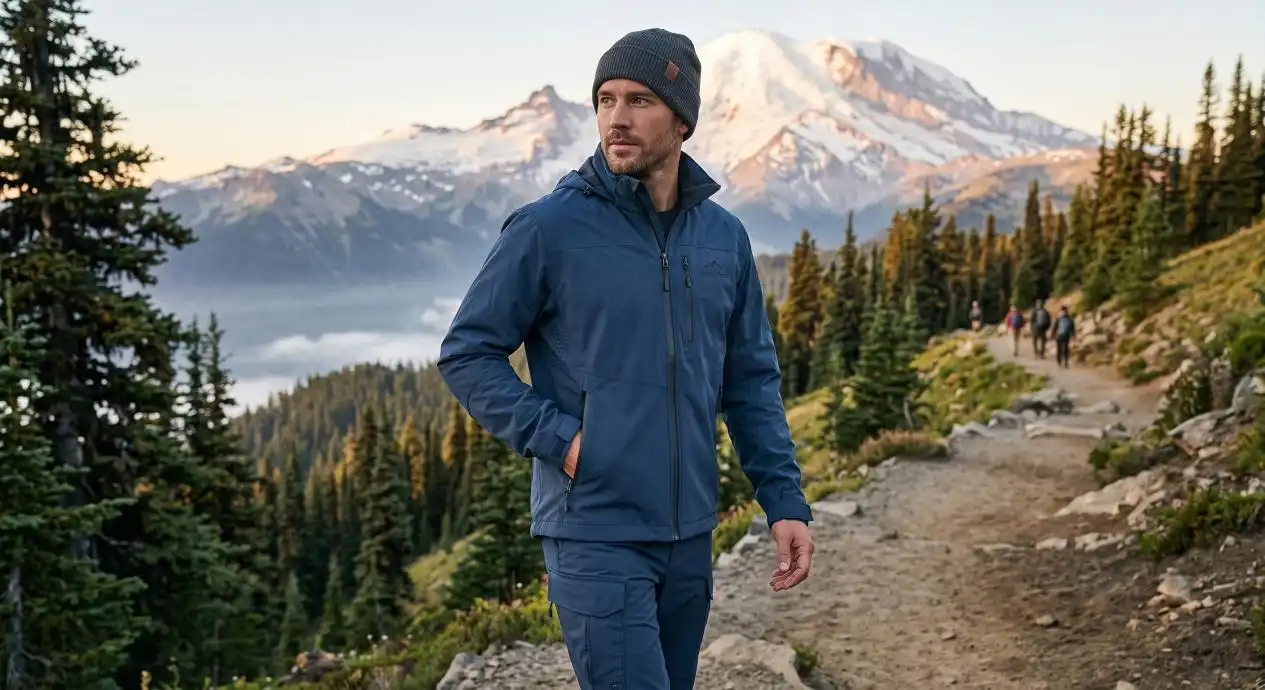
The Engineering: Taslan uses an air-jet texturizing process where compressed air entangles synthetic filaments, fundamentally altering the fiber’s surface to mimic spun natural cotton.
Why Brands Choose It: It combines the rugged durability, tear resistance, and rapid drying of nylon with the soft, quiet, non-scratchy touch of cotton. It avoids the swishing noise typical of basic rain jackets.
Key Spec to Demand: Combine Taslan shells with a breathable microporous PU/TPU backing (3K/3K to 5K/5K waterproof/breathable rating) for high-performance city-to-trail shell jackets.
C. Heavyweight Washed Duck Canvas: The Heritage Workwear Hero
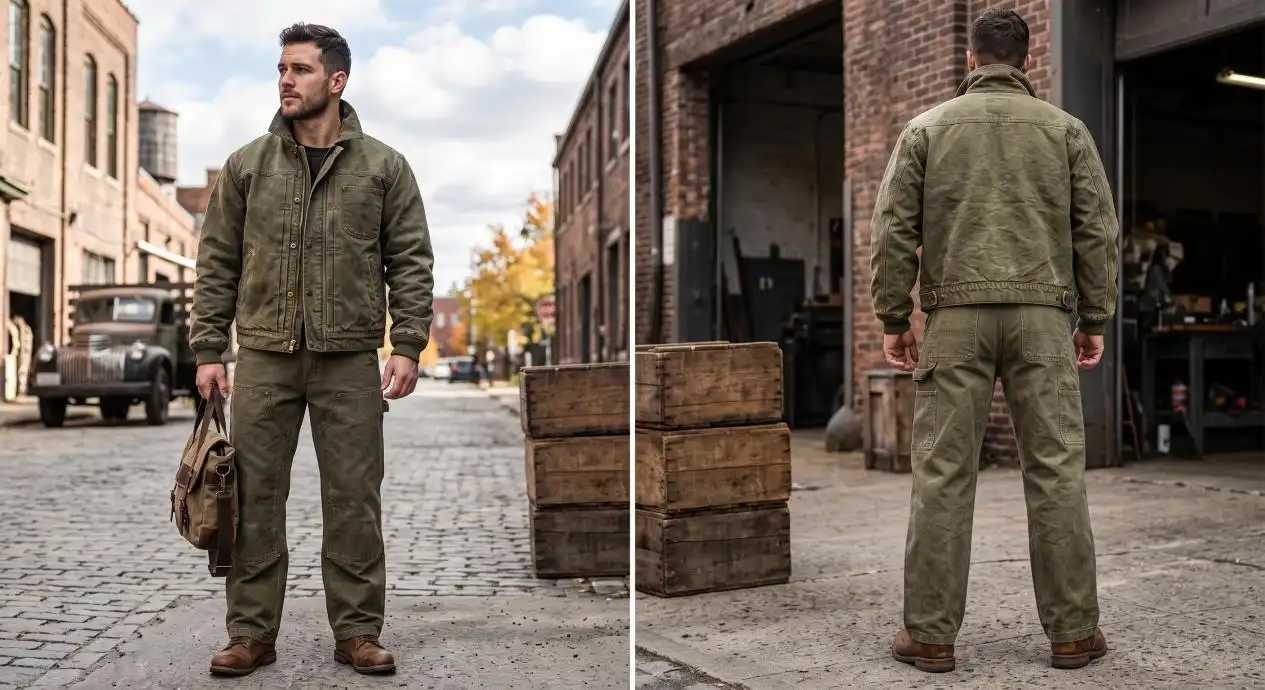
The Engineering: Tight, plain-weave double-fill cotton yarn ranging from 350 to 500+ GSM (12 to 16 oz per square yard).
Why Brands Choose It: True architectural workwear. Unlike draping knits, canvas creates a boxy, sculptural shoulder and torso shape that defines high-end chore coats, detroit-style jackets, and wide-leg work pants.
Key Spec to Demand: Unwashed raw canvas is too rigid for daily streetwear wear. Specify heavy enzyme stone-washing or silicone softening rinses during factory processing to break in the fibers and provide an authentic vintage drape without weakening seams.
3. Factory Execution: Critical Details for Technical Outerwear
Cutting and sewing woven shells requires completely different machinery and quality control standards than fleece manufacturing:
Seam Waterproofing & Needle Heat: High-speed sewing on coated nylon can melt synthetic fibers or punch wide puncture holes that leak moisture.
Factory Safeguard: We utilize fine ballpoint titanium needles with reduced stitching friction, matched with specialized heat-sealed seam tape on critical shoulder and hood seams to prevent water penetration.
Lining Selection & Static Prevention: Synthetic shells against synthetic fleece often generate uncomfortable cling and static charge.
Factory Safeguard: We pair technical shells with breathable micro-mesh linings, anti-static poly-taffeta, or custom diamond-quilted lightweight cotton linings to optimize internal thermal comfort and drape.
Heavy-Duty Hardware Sourcing: Light nylon coil zippers look cheap on heavy canvas or tactical outerwear.
Factory Safeguard: We integrate two-way #5 or #8 matte metal zippers, rubberized waterproof taped zippers, and industrial metal snap buttons tested for over 5,000 continuous open-and-close cycles.
Build Your Technical Outerwear Line with Bespoke
Expanding your brand from heavy fleece into specialized woven outerwear requires a manufacturing partner with dedicated woven assembly lines and technical fabric sourcing networks.
At Bespoke, we bridge the gap between street fashion aesthetics and technical utility—delivering complete outerwear solutions across matte crinkle nylons, coated taslans, and vintage-washed heavy canvas.