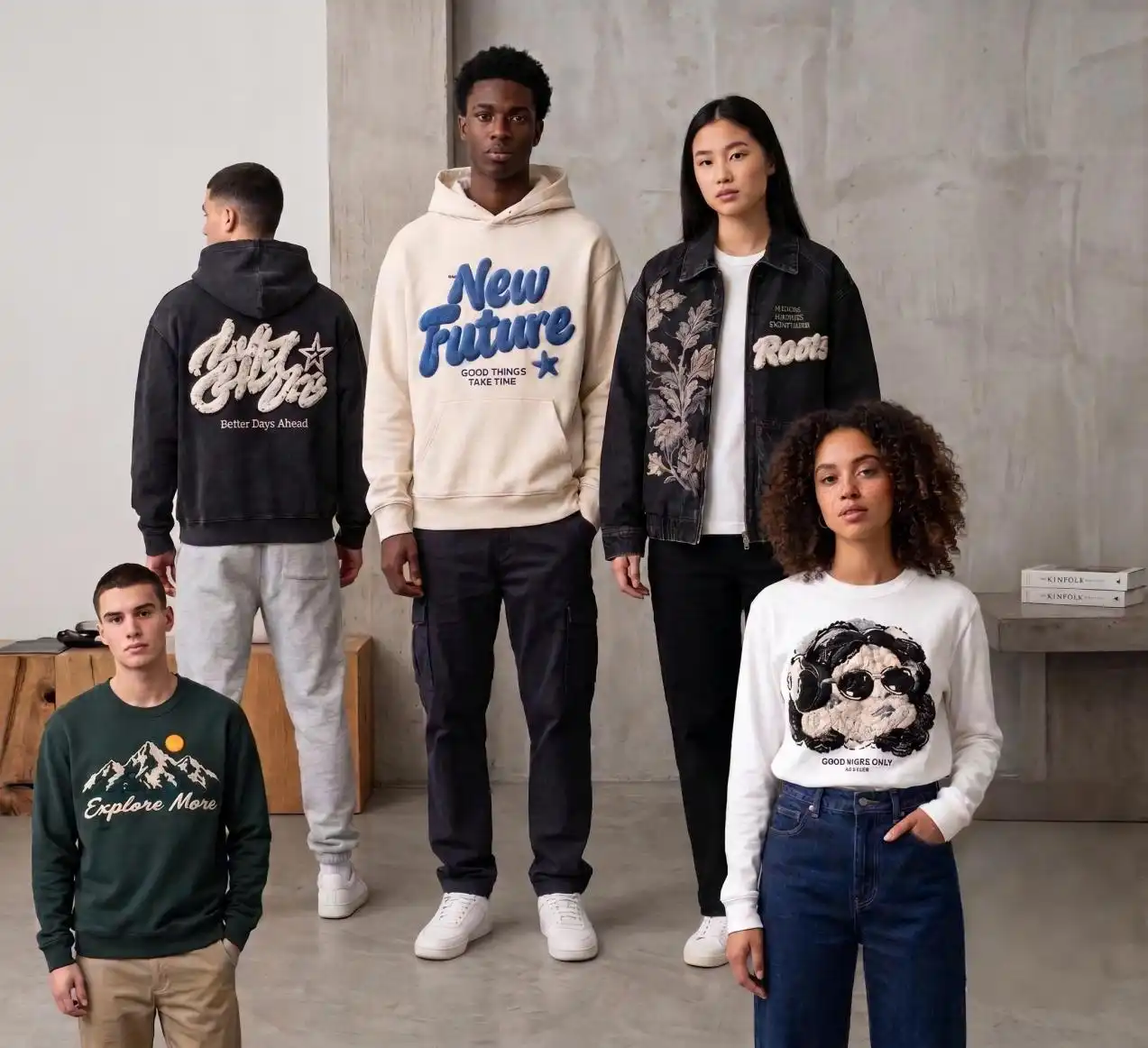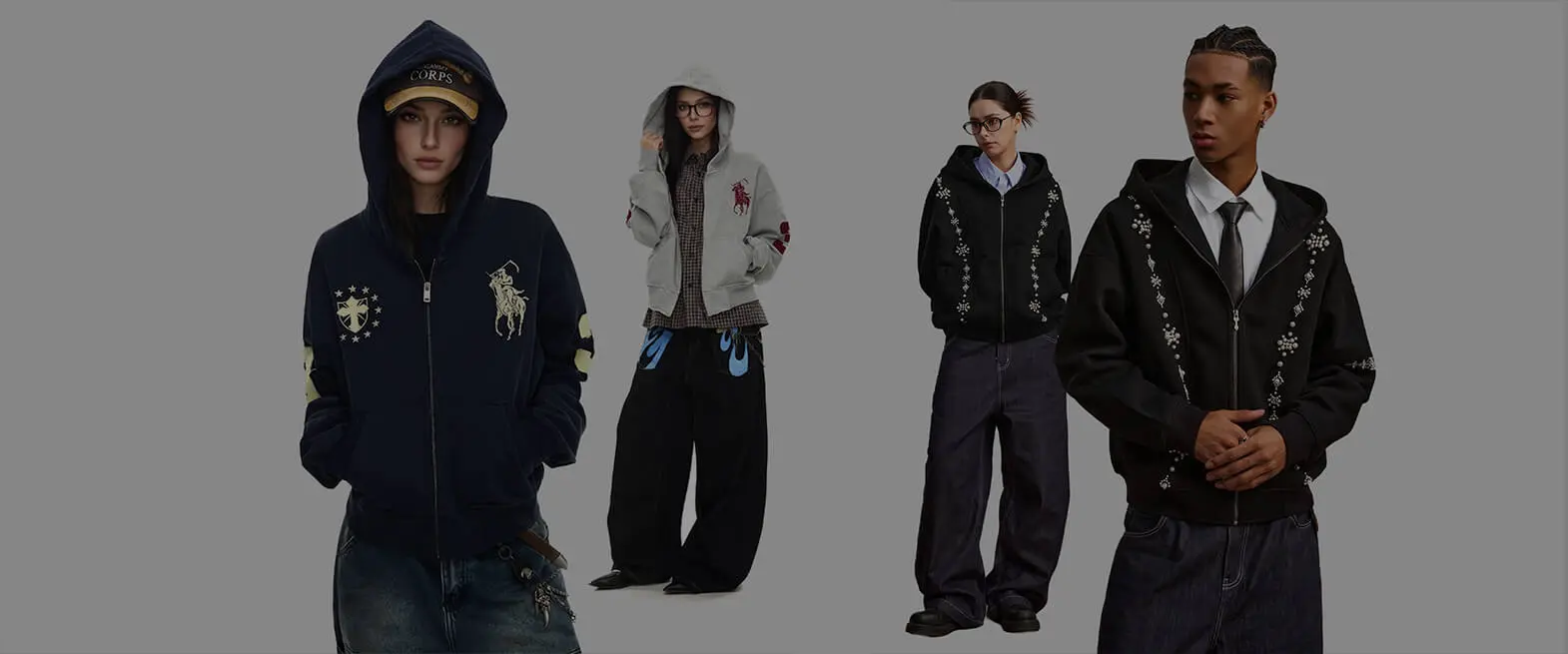
Engineering Tactile Dimension into Streetwear
When an independent brand attempts to transition from low-tier graphic drops to the $120–$250+ retail tier, flat screen prints and thin vinyl transfers quickly reach their limit. Discerning streetwear buyers look for textural depth, tactile density, and bespoke craftsmanship that cannot be knocked off on a desktop heat press.
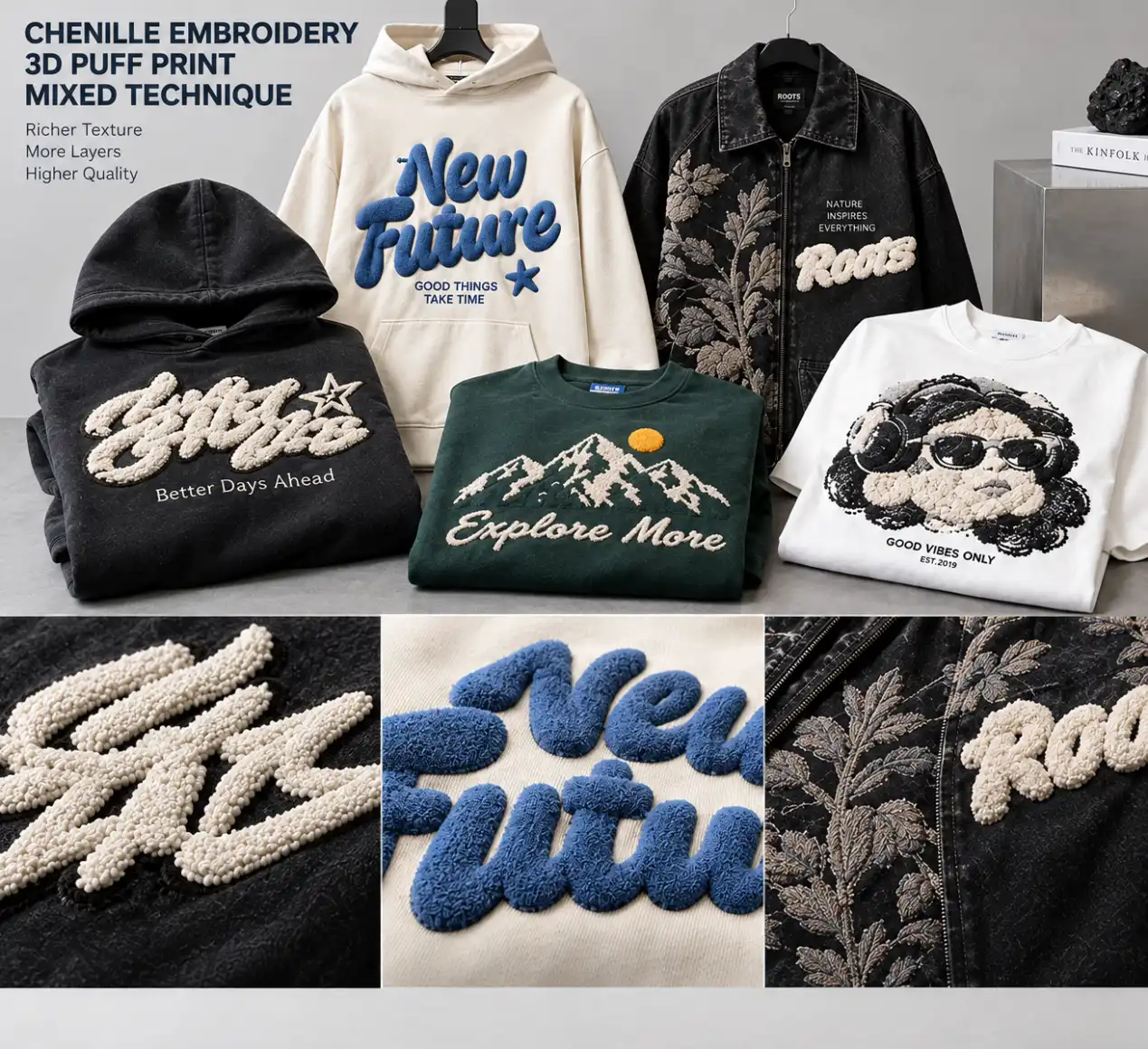
Advanced embellishments—specifically Chenille (Moss Stitch) Embroidery, High-Density 3D Puff Printing, and Engineered Mixed-Media Overlays—turn simple fleece and canvas into collectible statement pieces.
However, layering thick embroidery loops over high-rise puff prints creates significant manufacturing risks: needle deflection, needle punctures ripping the fleece, stiff “bulletproof” chest panels, and scratchy interior backings.
Here is our factory blueprint for executing multi-technique embellishments cleanly and durably.
1. Technical Comparison: Core 3D Embellishment Techniques
| Technique | Machinery & Mechanism | Visual & Tactile Profile | Best Fabric Base | Durability & Wash Care |
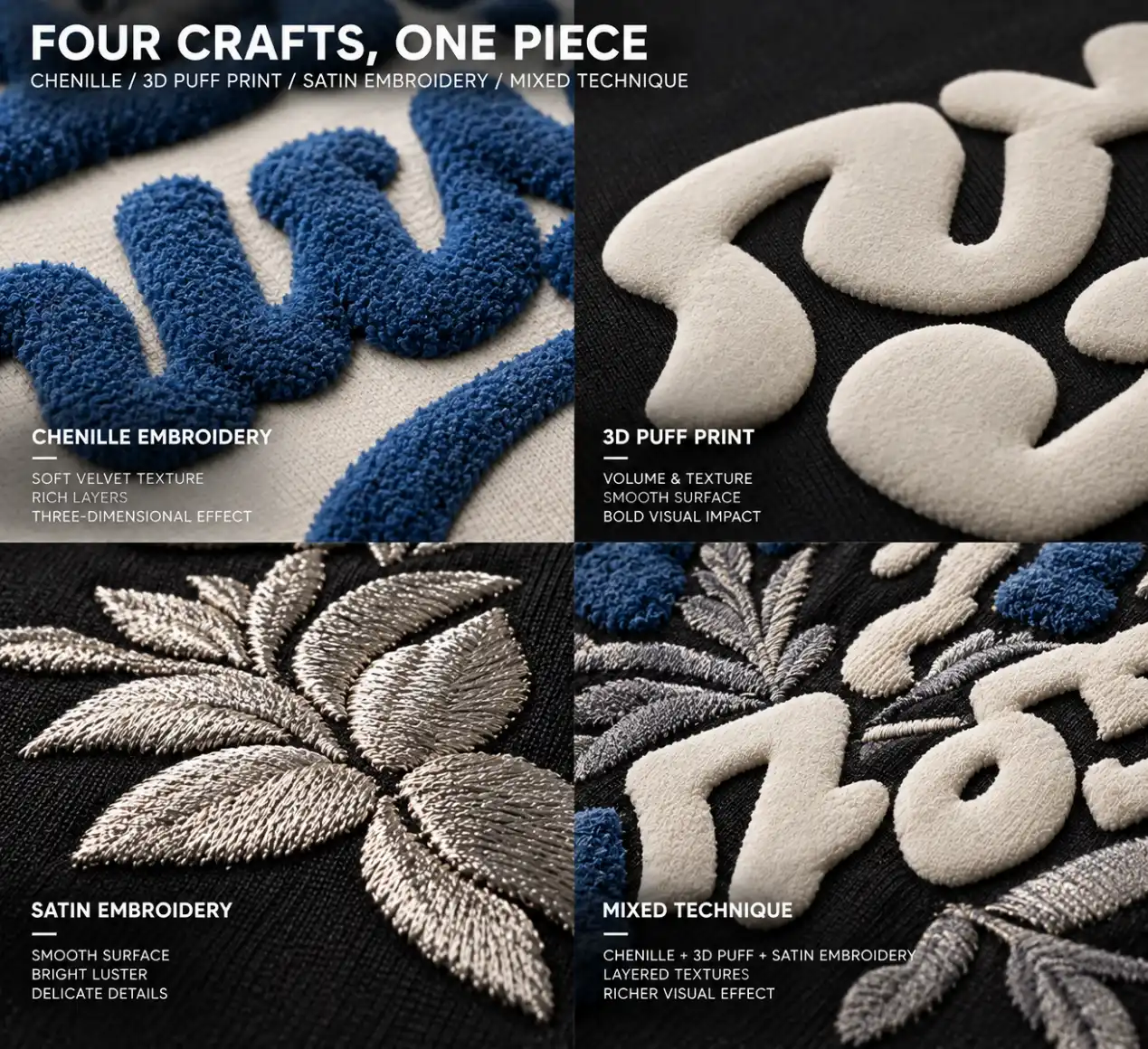
| Chenille Embroidery (Moss Stitch) | Specialized loop-pile chainstitch head; loops yarn upright on fabric face | Plush, carpet-like, soft fuzzy pile with vintage collegiate depth | 400+ GSM Fleece, Heavy Canvas, Boiled Wool | Grade 4.5; wash inside-out (gentle cycle) |
| High-Density 3D Puff Print | Screen print formulation with foaming agent expanding under cure heat | Sharp, rounded 3D relief (1.5mm–3mm rise) with matte rubbery feel | 240+ GSM Jersey, French Terry, Fleece | Grade 4; avoid excessive dryer heat to prevent collapse |
| Direct Satin Stitch (Flat/Padded) | Multi-needle digital embroidery; dense zig-zag thread laying over EVA foam | Crisp, lustrous, high-shine graphic contours | Knits & Wovens (requires tearaway backing) | Grade 5; indestructible against standard laundry cycles |
| Mixed-Media Composite | Precision registration layering embroidery over cured puff or printed bases | Intricate multi-layer depth; contrasting shiny thread against fuzzy pile | Heavyweight knits & structured outerwear | Requires calibrated factory registration |
2. Deep Dive: Mastering the Techniques
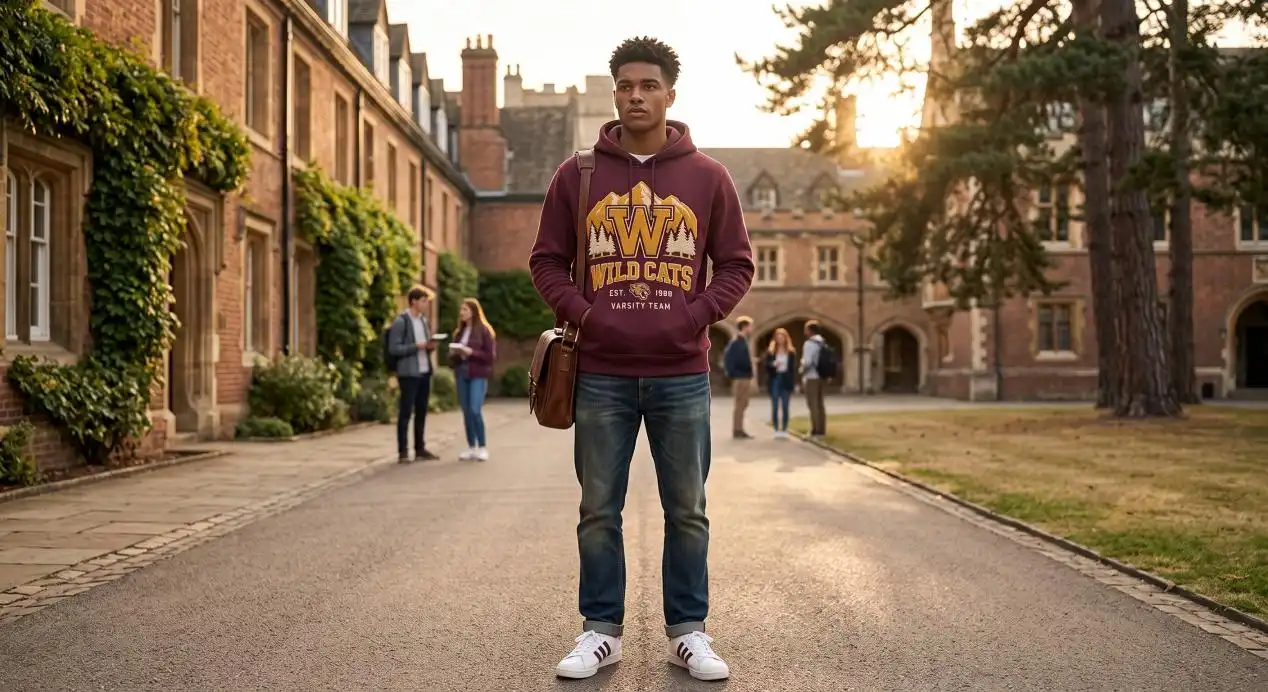
A. Chenille (Moss Stitch) Embroidery: Vintage Tactile Depth
How It Works: Rather than piercing straight through with standard threads, a specialized chenille machine loops thick acrylic or wool-blend yarns from the underside up, creating a dense, velvety carpet pile.
Aesthetic Advantage: It instantly evokes authentic varsity heritage, luxury retro aesthetics, and rich visual warmth.
Key Factory Rule: Chenille requires a solid perimeter barrier. We finish all chenille patches with an outer satin-stitch chain border to seal the yarn ends and prevent unraveling under friction.
B. High-Density 3D Puff Screen Printing: Architectural Streetwear Graphics
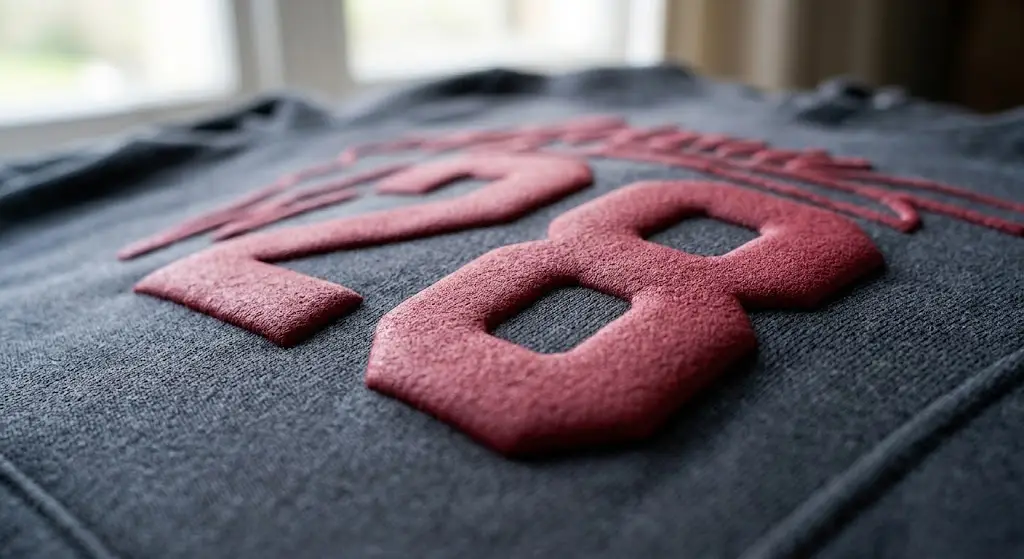
How It Works: A specialized micro-foam additive is blended into standard plastisol or water-based ink. When the printed garment passes through the curing tunnel at 160°C (320°F), the blowing agent activates, expanding the ink upward into a crisp 3D profile.
Aesthetic Advantage: Provides sharp geometric edges and distinct shadows across hoodie chests and back panels without the weight of thousands of embroidery stitches.
Key Factory Rule: Calibrating mesh count is critical. Using too fine a mesh starves the ink deposit, causing uneven bubbling; using too coarse a mesh results in an uncontrolled, porous sponge texture.
C. The Mixed-Media Trend: Overlapping Chenille & Flatlock Embroidery
The Streetwear Formula: Premium brands frequently overlap techniques—such as an oversized chenille letterform crossed by fine satin-stitch cursive script, or a 3D puff base outlined with fine-gauge metallic thread.
The Execution Challenge: Stitched thread cannot pierce through thick, cured 3D puff without crushing the foam or snapping the needle. We sequence the production pipeline so heavy embroidery anchoring occurs first, followed by calibrated registration screens for puff layers.
3. Factory Safeguards: Eliminating Sourcing Pitfalls
High-end brands cannot afford stiff, unwearable garments or scratchy interiors that irritate the skin. Precision manufacturing requires three baseline safeguards:
Eliminating the “Bulletproof Chest” Effect: Large, solid embroidery designs packed with high stitch counts turn flexible fleece into a rigid, curved cardboard panel.
Factory Safeguard: We utilize open-fill embroidery patterns, lightweight felt bases, or appliquéd panels to reduce overall needle penetration by 35–45%, retaining the natural drape and mobility of the garment.
Zero-Scratch Interior Linings: Coarse polyester backing mesh rubbing against bare skin causes immediate customer returns.
Factory Safeguard: Every interior embroidery surface is finished with ultra-soft heat-sealed fusible tricot backing (Baby-Lock backing), creating a buttery, irritation-free barrier.
Stitch Density Calibration & Anti-Pucker Engineering: High-density needles pull knit fibers tightly inward, causing wavy puckering around the design borders.
Factory Safeguard: We pair heavy knits with multi-directional tearaway/cutaway stabilizers and adjust automated machine tension dynamically to ensure the surrounding fabric stays completely flat after washing.
Bring Complex Embellishments to Life with Bespoke
Elevating your graphics into multi-dimensional art requires a manufacturing partner with specialized embroidery machinery, technical digitizing skill, and rigorous quality control.
At Bespoke, we specialize in full-package custom apparel manufacturing—seamlessly combining custom chenille embroidery, high-rise 3D puff printing, and hybrid mixed-media decoration across premium heavyweight garments.