The Shift from Fast-Fashion Jeans to Structural Denim
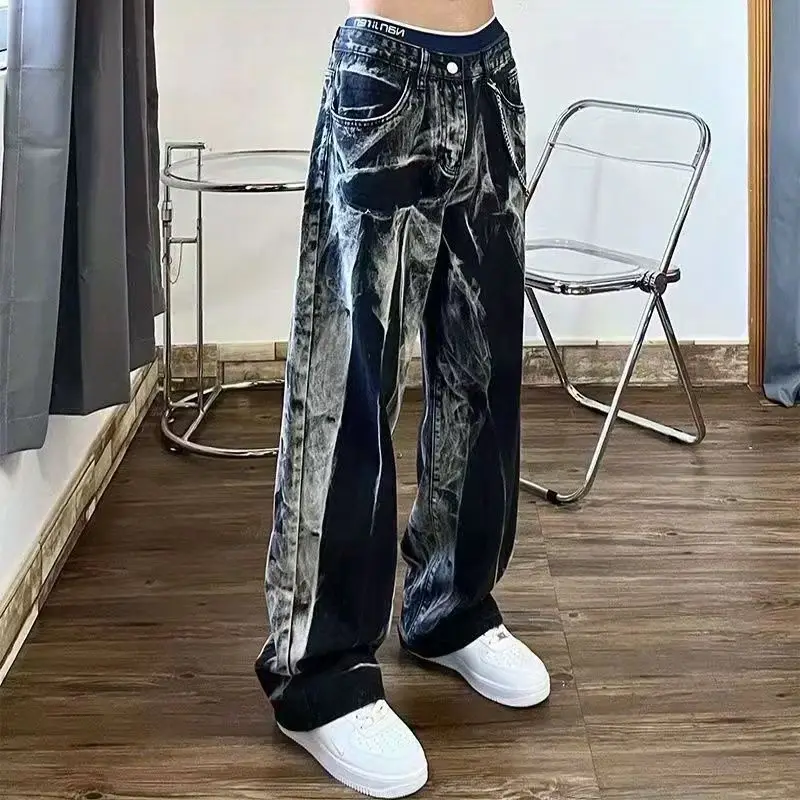
In premium streetwear, denim is judged by structural weight, wash depth, and needle-level durability. A generic pair of jeans with a flat, chemical-bleach finish signals low barrier production, whereas deep indigo fades, structural 13–15 oz selvedge or ring-spun twill, and authentic 3D whiskering justify retail price points from $160 to $350+.
Producing high-spec denim requires bridging traditional heavy-duty tailorship with controlled chemical and mechanical wash engineering. A single error in warp-direction shrinkage calculation or improper bar-tack tension can cause twisted legs, blown crotches, or misaligned distressing.
Here is the exact step-by-step manufacturing pipeline used to engineer premium custom denim from raw fabric bolts to hand-finished collections.
1. The Production & Finishing Pipeline
[Raw Denim Inspection & Shrinkage Testing] ➔ [Heavy-Gauge Pattern Cutting & Assembly]
▼
[Union Special Chainstitching & Hardware Setting] ➔ [Manual Whisker & Honeycomb Scraping]
▼
[Stone Wash / Enzyme Bath / Tinting] ➔ [Ozone Bleach / Laser Detailing]
▼
[Curing, Tumble Drying & Dimensional QC Check]
2. Stage-by-Stage Manufacturing Operations
Stage 1: Fabric Selection & Shrinkage Profiling
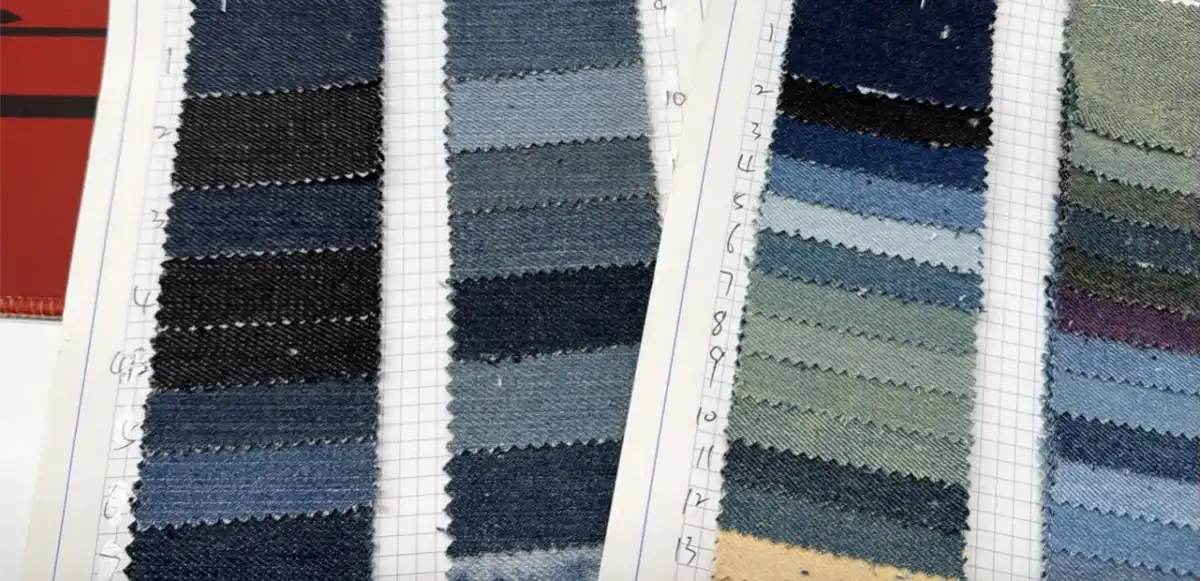
Yarn & Weight Selection: We select between 12.5 oz and 15 oz 100% ring-spun combed cotton denim, or 99/1 comfort-stretch combinations. High-end lines prioritize rope-dyed indigo yarns where the indigo pigment coats only the exterior circumference of the yarn, keeping the core white for crisp fade contrast.
Skewing & Torque Audits: Raw twill weaves are prone to “leg twist” where the outseam swings onto the front shin after washing. All fabric runs undergo Sanforization and skewing verification to lock the grainline within +/- 1.5 degrees.
Stage 2: Heavy-Duty Garment Assembly
Union Special Chainstitching: Hem closures are sewn on vintage-style Union Special chainstitch machines. The natural pull of the multi-thread chainstitch creates the coveted “roping effect” (diagonal puckering and abrasion) along the bottom hem during washing.
Felled Seams & Heavy Ticket Thread: Yoke seams, outseams, and crotch curves are joined with triple-needle or flatlock felled stitching using high-tensile core-spun poly-cotton thread (Ticket 30/40) to prevent blowouts under tension.
Reinforced Stress Points: Pocket corners, belt loops, and fly bottoms are secured with dense bar-tacks (42–48 stitches per tack) and backed with solid brass interior rivets.
Stage 3: Hand Abrasion, Whiskering & Distressing
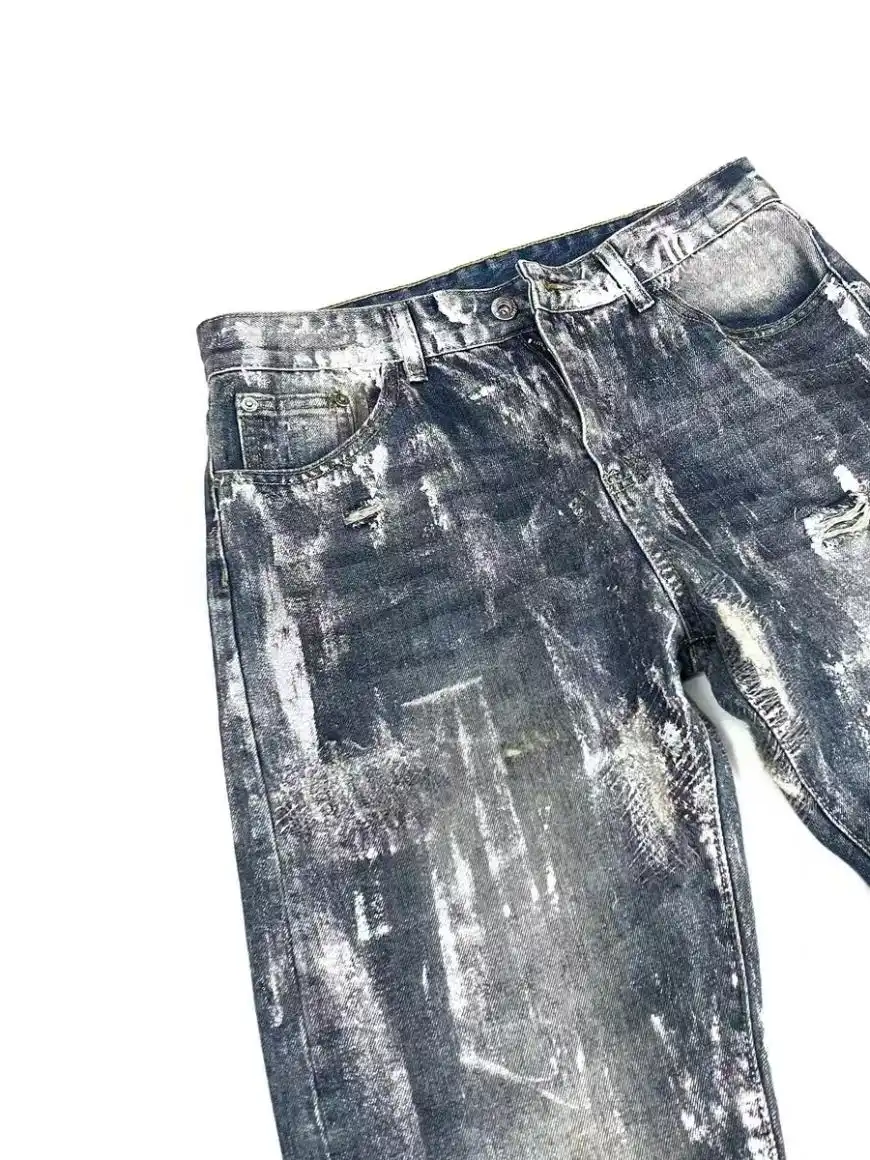
3D Hand Scraping (Whiskers & Honeycombs): Jeans are mounted on inflated rubber mannequins. Master technicians manually abrade the indigo using specialized sandpaper blocks, hand-grinders, and localized scrapers to mimic authentic thigh creases (whiskers) and knee-back bends (honeycombs).
Controlled Fraying & Grinding: Pocket mouths, waistband perimeters, and hem edges receive calibrated edge grinding to break through the top warp threads without cutting into the structural weft.
Stage 4: Wash House Processing & Tinting
Enzyme Stone Wash: Jeans enter industrial drum washers with neutral cellulase enzymes and volcanic pumice stones. The stones soften the dense 14 oz twill and knock off the surface indigo, exposing the white core beneath.
Eco-Ozone & Bleach Deposition: Instead of harsh liquid chlorine that rots cotton fibers, we deploy ozone-gas fade cycles or localized potassium permanganate spray to achieve bright highlights on thighs and seat panels.
Dirty Tinting & Resin Baking: To achieve authentic vintage, muddy, or 90s skater aesthetics, garments receive a subtle tea, earth, or yellowish pigment tint in a secondary bath, followed by 3D crease resin spraying and 150°C oven curing to lock the fold lines permanently.
3. Factory Execution: Critical Denim Sourcing Safeguards
| Quality Failure | Root Cause in Conventional Factories | The Bespoke Production Safeguard |
| Severe Leg Twist | Cutting off-grain or ignoring twill torque | Right-hand twill skew stabilization + grainline pinning during laser cutting |
| Crotch & Seam Blowout | Weak lockstitching using light polyester thread | Double/triple felled seams sewn with heavy-duty core-spun Ticket 30 thread |
| Pocket Bag Tearing | Using cheap 45 GSM non-woven pocket cloth | 100% cotton 180 GSM heavy herringbone twill pocket bags |
| Rusted or Popped Hardware | Thin zinc alloy rivets with short prongs | Solid brass or copper rivets with dual-prong backs rated for 25 kg pull-force |
| Over-Cooked Holes | Aggressive acid washing eroding fabric fibers | Reinforcing distressed tears with internal ripstop backings and darning stitches |
Scale Your Custom Denim Line with Bespoke
Manufacturing authentic, high-value streetwear denim demands specialized machinery, skilled hand-distressing artisans, and strict wash-house chemistry.
At Bespoke, we manage the entire custom denim pipeline—from sourcing heavy rope-dyed indigo twill and engineering custom-branded metal shanks to executing hand-crafted vintage washes, chainstitched hems, and strict AQL 2.5 final inspections.