Why Tapestry Manufacturing Requires Specialized Engineering
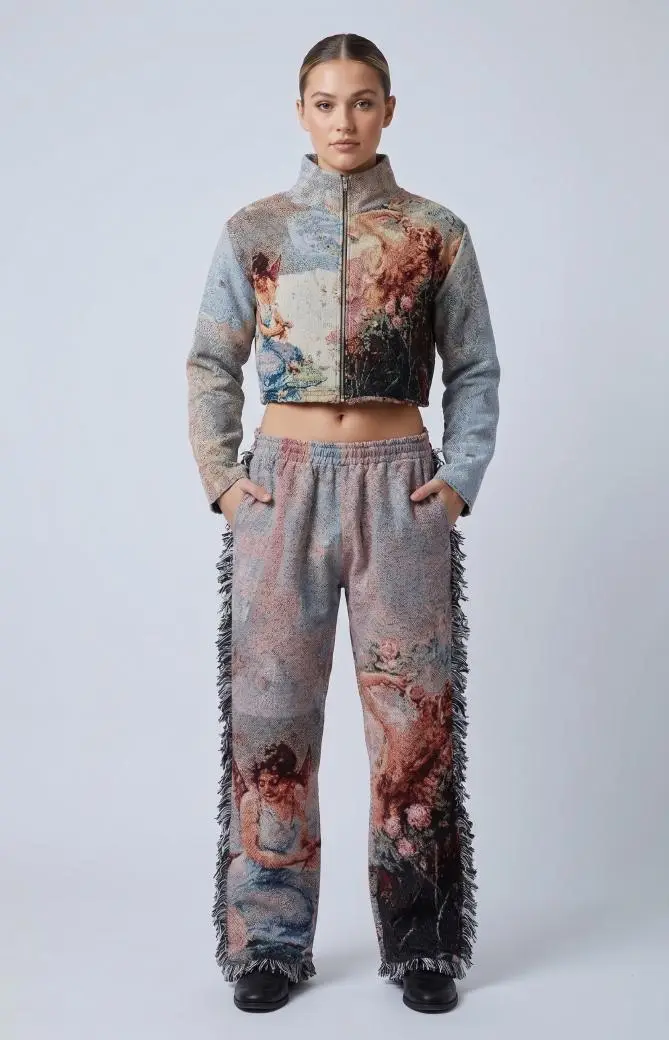
Custom woven tapestry has emerged as a high-margin hero category for premium streetwear. However, producing a structural tapestry jacket or hoodie involves a fundamentally different workflow than cutting standard fleece or jersey.
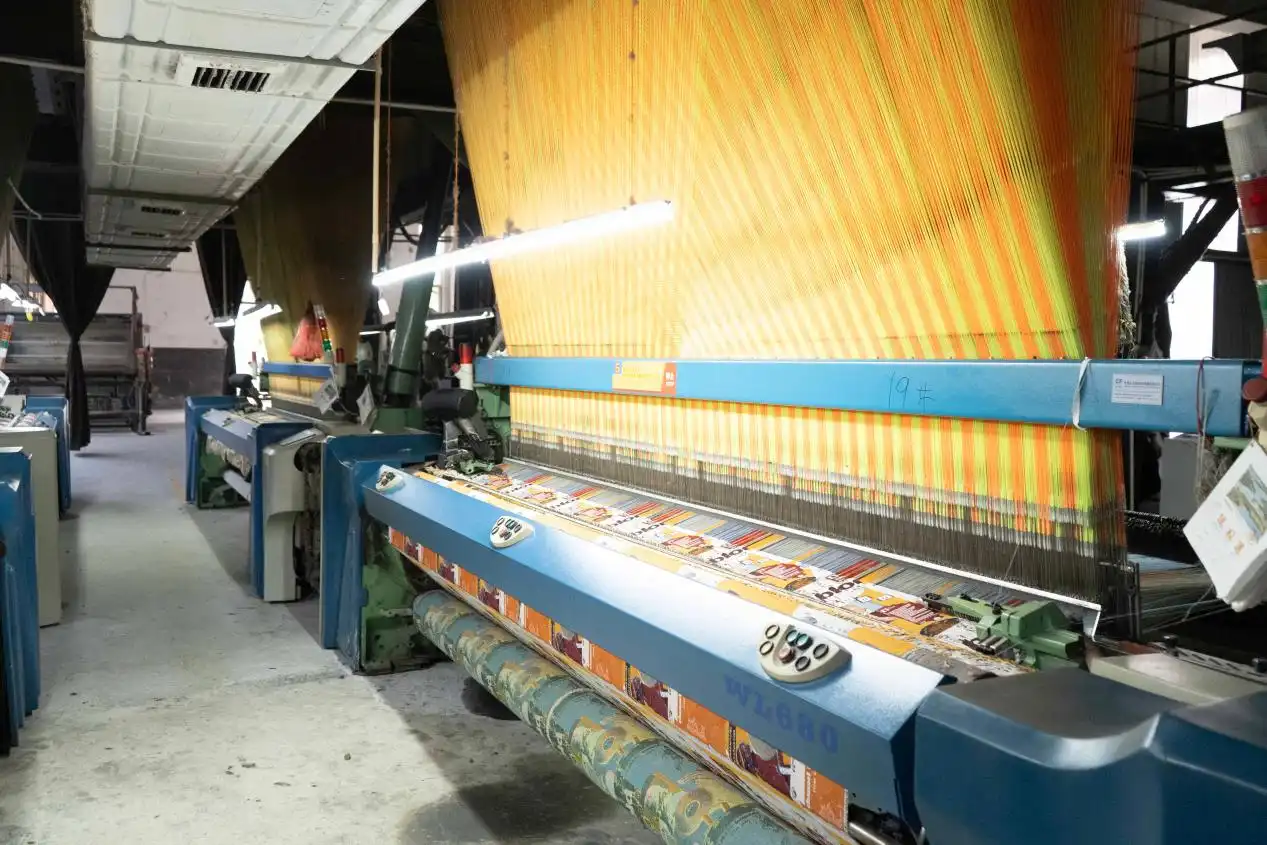
Tapestry fabric is not printed—it is woven on industrial jacquard looms from thousands of individual yarn spools. Because the textile is structural and prone to fraying, assembling it into a functional, luxury-grade garment requires rigorous pattern engineering, specialized edge treatments, and precise hardware assembly.
Here is an inside look at how a digital concept is transformed into a production-grade tapestry garment inside our facility.
1. The Production Workflow: From Vector File to Finished Outerwear
Internal factory manufacturing workflow:
[Digital Vector Artwork] ➔ [Thread Mapping / Point-Paper Digitizing] ➔ [High-Density Jacquard Loom Weaving]│▼[Edge Stabilization / Heat Sealing] ➔ [Pattern Cutting & Seam Alignment] ➔ [Internal Lining & Clean Finishing]│▼[Heavy-Duty Hardware Integration] ➔ [AQL 2.5 Quality Inspection & Finishing]
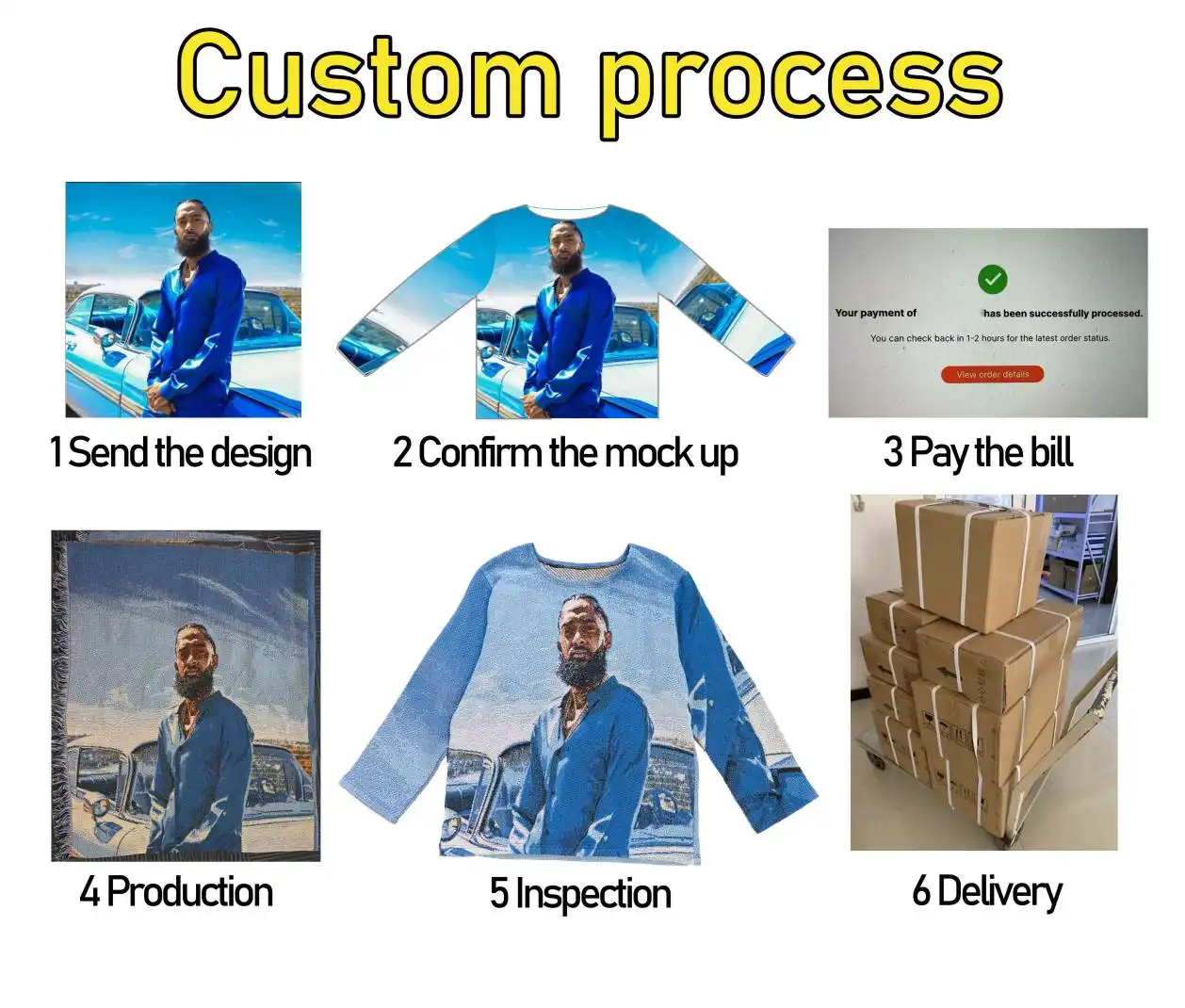
Below illustrates our full client-facing order journey:
2. Detailed Technical Stages
Stage 1: Point-Paper Digitizing & Yarn Formulation
Pixel-to-Thread Translation: Standard vector artwork (Adobe Illustrator) cannot be sent directly to a loom. Our textile technicians translate the digital linework into a specialized jacquard point-paper program.
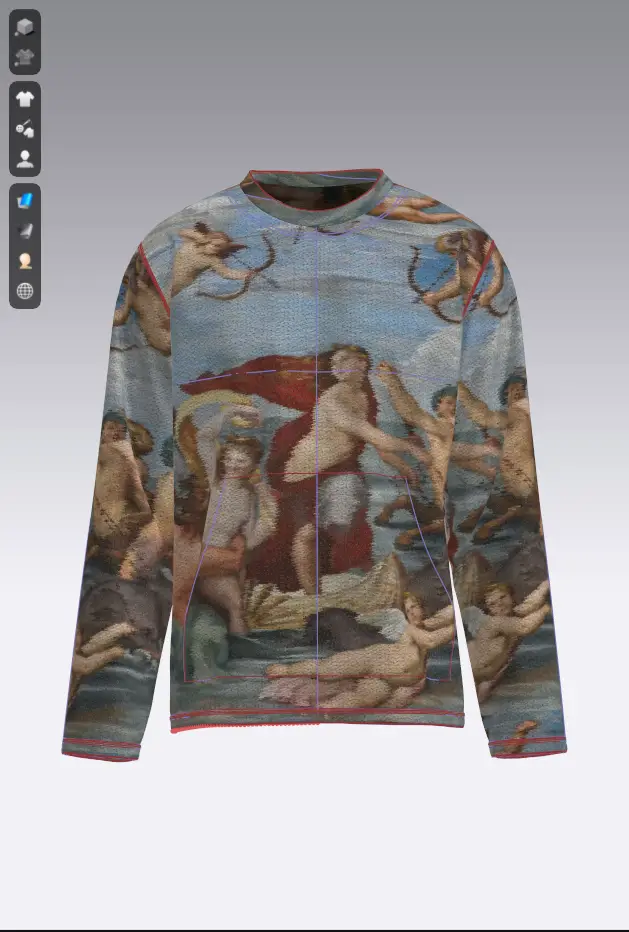
Optical Color Blending: Rather than printing mixed inks, the loom alternates warp and weft intersections across satin, twill, and plain weave structures. Thread densities are calibrated (typically 120–180 picks per inch) to achieve sharp resolution without muddying transitions.
Stage 2: High-Density Jacquard Weaving
Yarn-Dyed Execution: Spun cotton-polyester yarns are pre-dyed to specific Pantone (PMS) references to guarantee absolute colorfastness.
Structural Calibrations: The yardage is woven at high density (450–600 GSM), ensuring structural heft and abrasion resistance while maintaining enough flexibility for functional outerwear.
Stage 3: Edge Stabilization & Precision Cutting
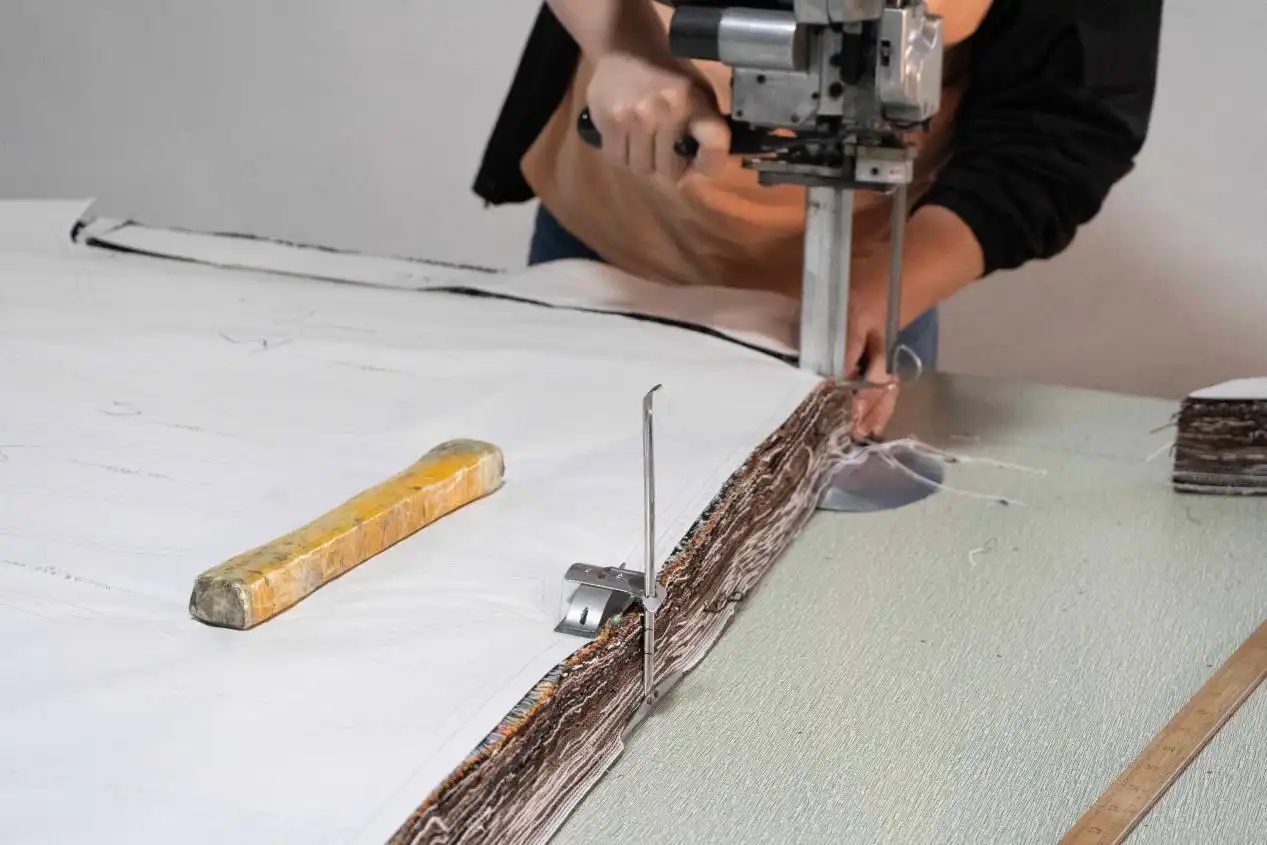
Preventing Weave Unraveling: Woven tapestry consists of interlaced floating threads that rapidly fray once cut. To preserve the pattern borders, fabric edges are stabilized or laser-cut to lock the warp and weft margins.
Seam Matching (Pattern Alignment): The front placket, split chest pockets, and side seams are hand-aligned before cutting. This guarantees that large-scale illustrations align across zipper closures without visual disruption.
Stage 4: Garment Assembly & Anti-Fray Stitching
Full Interior Binding & Linings: Tapestry cannot be left with raw interior seams. Every piece is constructed with:
- Diamond-quilted satin or smooth cotton-twill linings for comfortable skin contact.
- Overlocked, piped, or French-bound interior margins to eliminate all exposed raw edges.
Reinforced Stress Points: Pocket corners and cuff junctions receive dense bar-tack stitching to handle high-tensile pulling.
Stage 5: Hardware & Finishing
Heavy-Duty Fastenings: Heavy tapestry shells overpower light nylon zippers. We install custom #5 or #8 matte antique brass two-way zippers, reinforced snap closures, and dense cotton drawstrings with engraved metal tips.
3. Factory Execution: Sourcing Safeguards
| Failure Point | Why It Happens in Standard Factories | The Bespoke Production Safeguard |
| Misaligned Art Across Zipper | Bulk cutting without registration pins | Hand-mapped digital cutting templates with manual grain matching |
| Fraying Seams After Washing | Using basic 3-thread overlock stitching | 5-thread safety overlocking + full internal lining construction |
| Bulky, Lumpy Neck & Cuffs | Folding thick 500 GSM tapestry into ribbing | Shaved seam allowances paired with high-recovery custom knit ribbing |
| Stiff, Unwearable Drape | Poor yarn blend or over-tight tension | Calibrated cotton-poly warp ratios offering structured volume without rigidity |
Build Your Next Tapestry Drop with Bespoke
Manufacturing high-spec tapestry outerwear requires direct loom programming, precision cutting, and experienced garment tailors.
At Bespoke, we manage the entire tapestry manufacturing pipeline under one roof—from digitizing your complex vector art to custom weaving, pattern matching, and full-package final assembly.