The Shift from Surface Inks to Structural Weaving
In modern streetwear, standard graphic tees and screen-printed hoodies face severe market fatigue. Consumers now associate standard plastic-feel screen prints with low-barrier blanks, while cracking and peeling after multiple washes degrade brand equity.
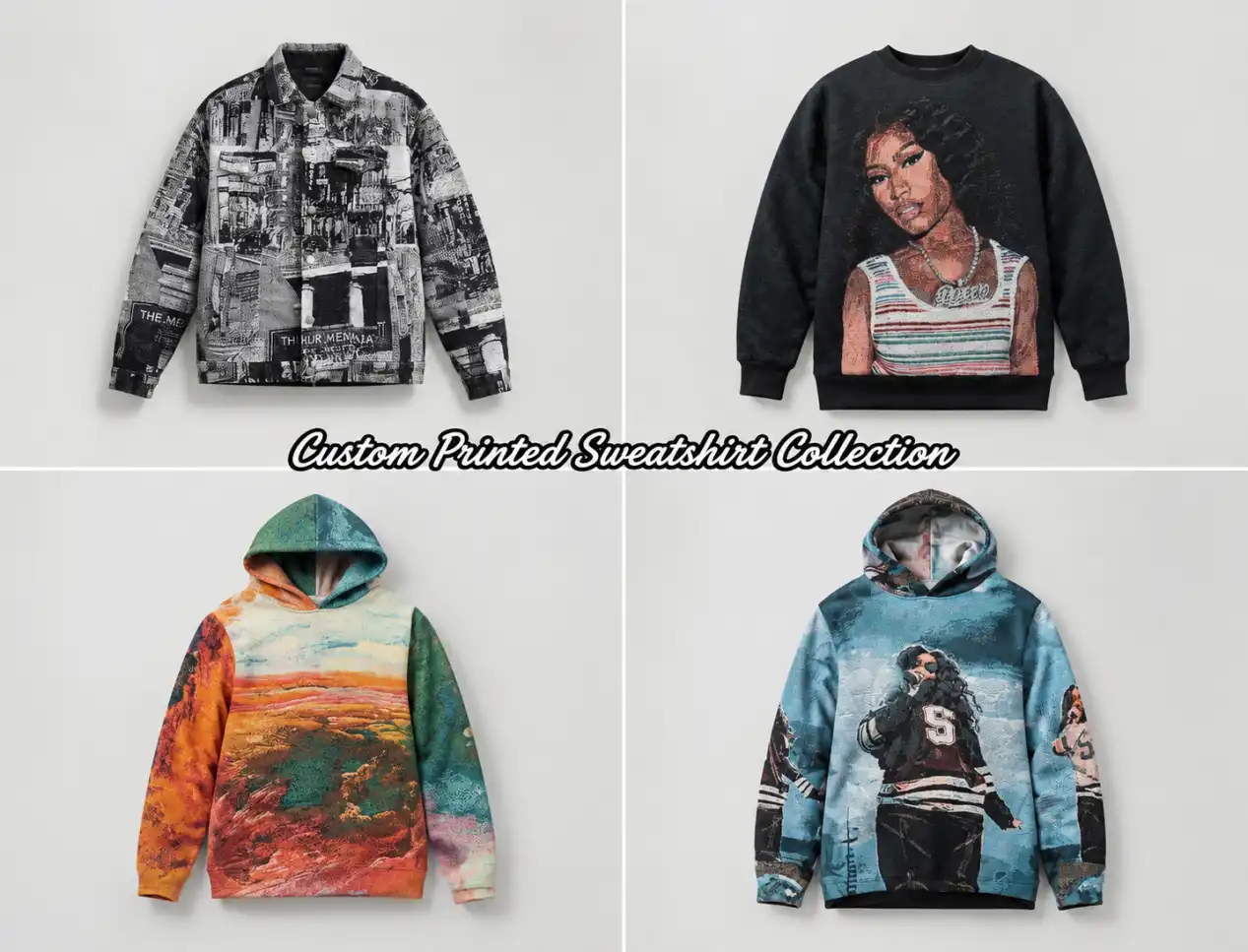
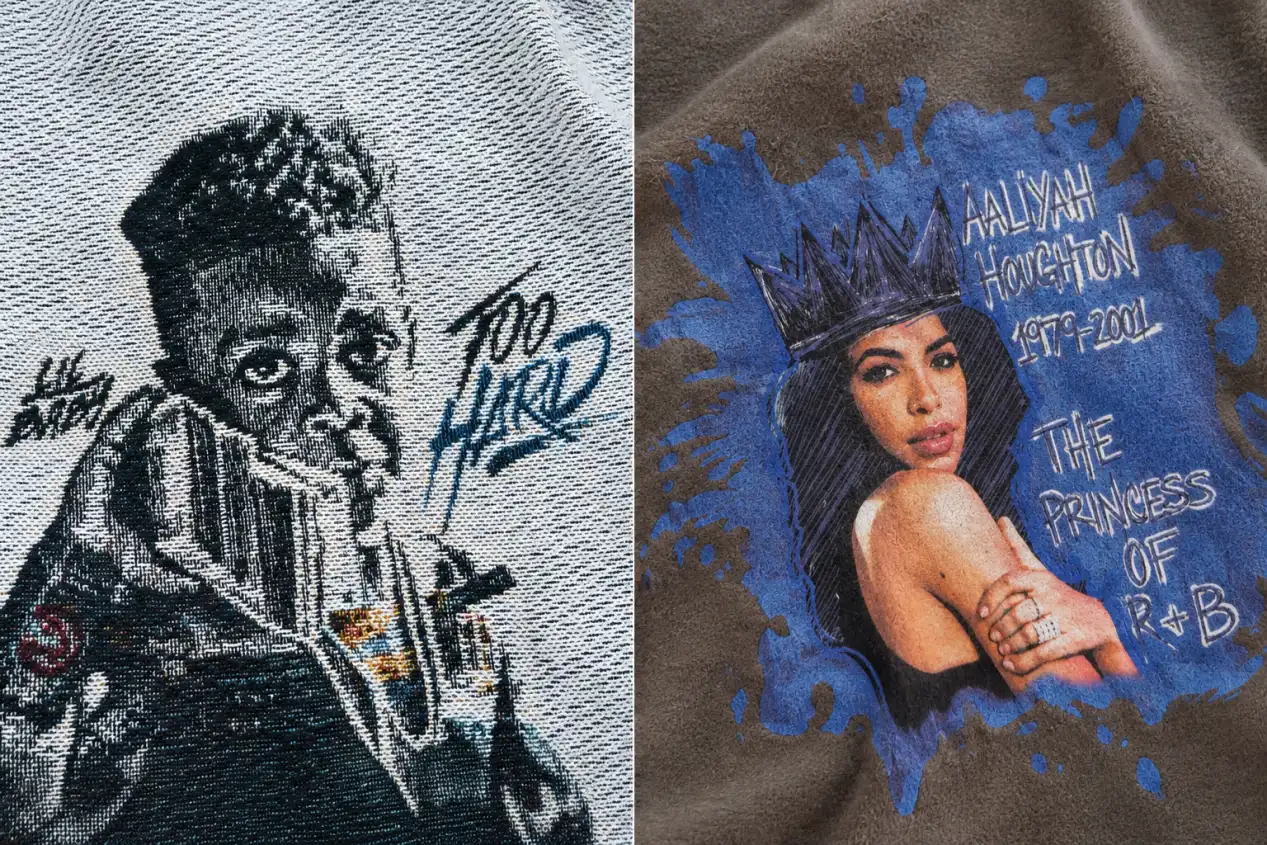
High-end independent labels and designer brands are replacing flat surface embellishments with custom woven jacquard and tapestry textiles. By interlacing yarn-dyed threads to form high-fidelity artwork directly within the fabric matrix, brands achieve substantial physical heft, rich tactile depth, and immediate retail pricing power ranging from $140 to $300+.
| Feature | Custom Woven Tapestry (Jacquard) | Standard Printed Fleece (Screen / DTG) |
| Material Construction | Yarn-dyed warp & weft interlaced structure | Knitted cotton fleece + surface ink layer |
| Average Fabric Weight | 400–600 GSM (Substantial, structured drape) | 350–450 GSM (Soft, relaxed drape) |
| Durability & Longevity | Zero cracking/peeling; wash-proof artwork | Inks degrade, fade, and crack over wash cycles |
| Tactile Texture | Raised woven relief, three-dimensional grain | Flat surface or rubbery ink deposit |
| Typical Garment Types | Workwear jackets, overshirts, panel hoodies | Standard pullover hoodies, crewnecks |
| Retail Price Tier | $140 – $300+ (High-perceived value) | $60 – $120 (Standard streetwear blank tier) |
1. Structural Architecture: How Digital Art Becomes Woven Yardage
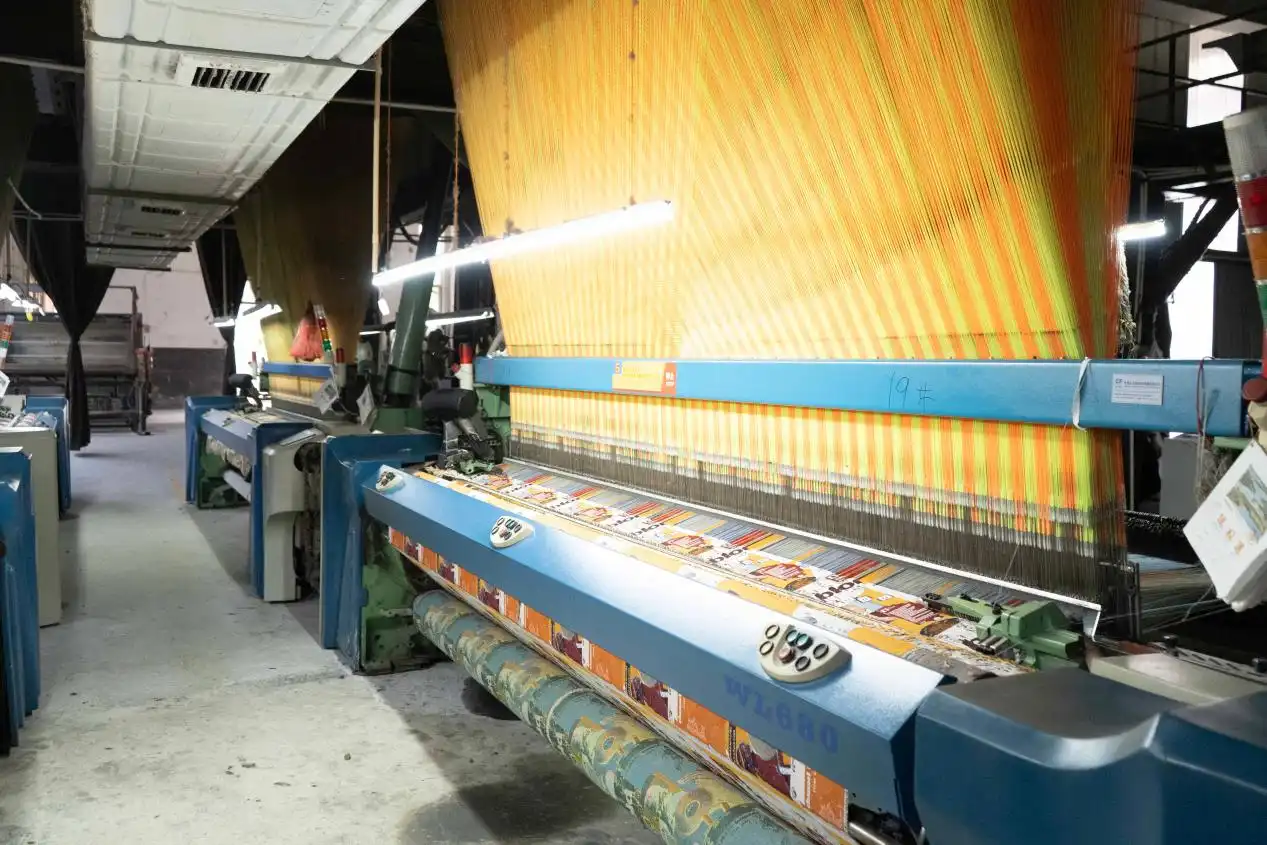
Unlike surface prints applied to pre-knitted cloth, custom tapestry relies on high-density jacquard looms operating with individual thread control:
• Warp and Weft Color Mixing:Complex multi-color illustrations are translated into digital point-paper designs. By alternating colored warp (vertical) and weft (horizontal) yarns across various weave structures (twill, satin, plain variations), the loom generates thousands of perceived shades through optical color blending.
• Structural Stability and Heavier Hand-Feel:Woven tapestry naturally ranges from 400 to over 600 GSM. This density provides the structural rigidity required for tailored outerwear silhouettes without requiring thick synthetic backings.
• Permanent Colorfastness:Because the yarns are dyed prior to weaving (yarn-dyed) rather than printed on top, the design retains complete colorfastness against wash abrasion and sun exposure.
2. High-Impact Streetwear Applications
Leading streetwear collections integrate custom jacquard across several high-performing categories:
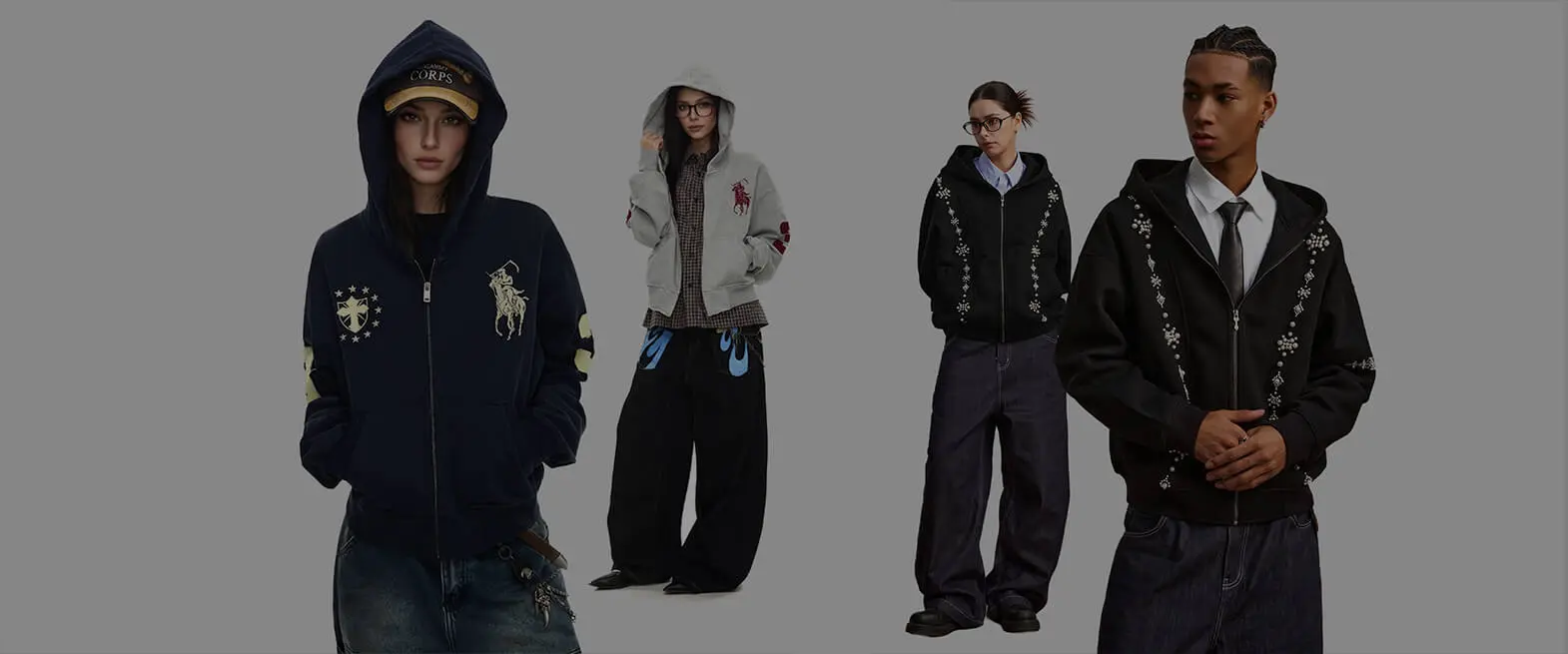
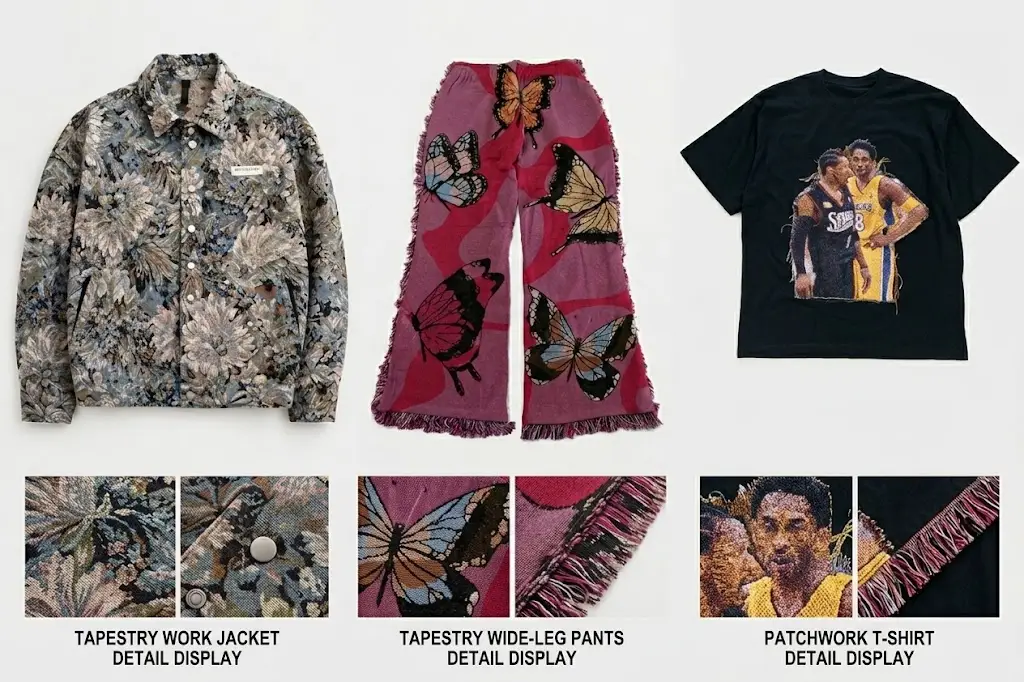
• Tapestry Chore & Trucker Jackets:Fully woven exterior shells lined with diamond-quilted satin or lightweight cotton twill, finished with heavy metal hardware for a luxury utility look.
• Hybrid Fleece Outerwear:Pairing custom-woven tapestry front panels or hoods with heavy 450 GSM combed cotton fleece bodies, balancing striking visual detail with the comfort of knitwear.
• Structural Wide-Leg Pants & Shorts:Woven tapestry trousers cut in relaxed, straight-leg silhouettes that maintain their architectural shape while walking.
3. Sourcing Pitfalls & Factory Execution
Translating digital vector art into physical tapestry requires technical precision. Brand developers often face specific manufacturing hurdles when sourcing woven garments:
• Vector Translation & Pixel Distortion:Digital art cannot be directly fed to a loom without thread-mapping. Fine vector linework must be calibrated to the loom’s weft resolution (picks per inch) to prevent jagged contours or lost detail.
• Pattern Alignment Across Seams:Precision cutting is critical. Placket closures, front-to-back side seams, and pocket placements must align with millimeter accuracy to prevent broken visual motifs.
• Fraying & Edge Finishing:Woven tapestry raw edges unravel rapidly during production. High-grade execution requires full edge-overlocking, binding, or clean interior facings to guarantee garment durability.
Scale Your Custom Tapestry Line with Bespoke
Launching custom woven garments requires a manufacturer with direct loom capabilities, technical digitizing expertise, and garment assembly experience.
At Bespoke, we manage the complete tapestry manufacturing pipeline—from translating your digital vector artwork and selecting yarn combinations to high-precision seam alignment and full-package garment assembly.